

2026 Volvo XC60 Plug-in hybrid in Bristol, TN
The 2026 Volvo XC60 Plug-in Hybrid is designed to integrate electrification with established mechanical engineering in a controlled and measured manner. This model uses a plug-in hybrid configuration to deliver both electric driving capability and gasoline-powered range without compromising structural balance or vehicle usability. The 2026 Volvo XC60 Plug-in Hybrid is positioned as a midsize luxury SUV that emphasizes drivetrain efficiency, controlled power delivery, and advanced safety integration. Its design reflects a methodical approach to electrification, supported by a chassis and electronic architecture developed to manage dual power sources under varying driving conditions.
Connectivity Systems and Vehicle Integration
Connectivity features extend beyond infotainment functions. Navigation systems can incorporate charging locations and route planning based on available battery range. Mobile application integration allows drivers to monitor charging progress, schedule charging sessions, and precondition the cabin temperature while the vehicle is connected to external power.
Voice recognition functionality allows drivers to control navigation and vehicle settings without manual input. These systems are integrated into the vehicle’s electronic architecture to support safe operation and reduce distraction.
Drive Modes and Power Management Logic
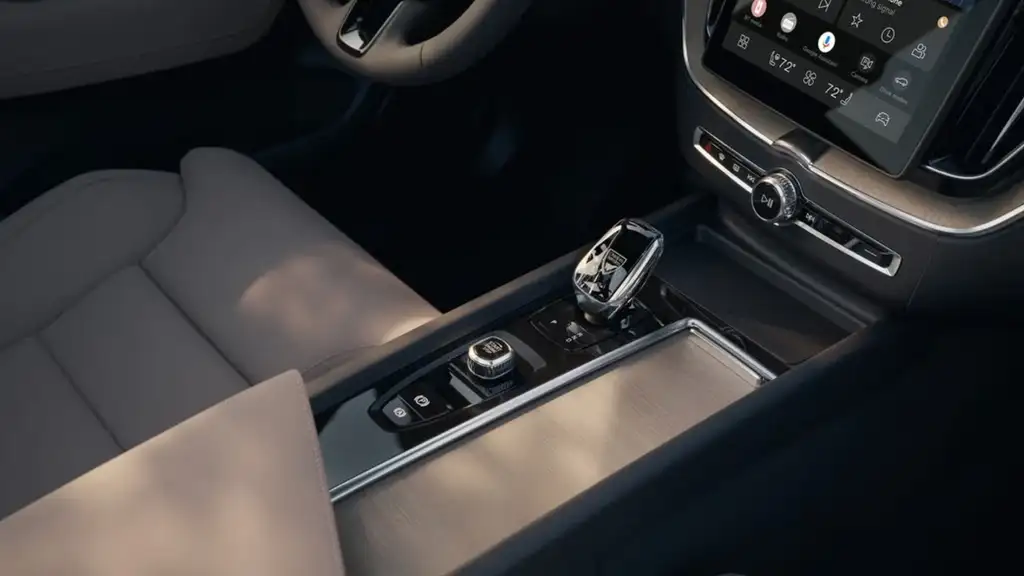
Multiple drive modes allow the 2026 Volvo XC60 Plug-in Hybrid to adjust vehicle behavior based on driving requirements. These modes influence throttle response, steering calibration, braking regeneration intensity, and power distribution. In electric-focused operation, the vehicle prioritizes battery power and limits gasoline engine engagement. Hybrid operation balances both power sources to improve overall efficiency during mixed driving conditions.
All-wheel-drive engagement is dynamically controlled, with torque allocation adjusted continuously to support traction and stability. The absence of a mechanical connection between axles allows faster torque adjustments during changing road conditions, including wet surfaces and uneven terrain. This electronic all-wheel-drive system operates automatically without driver intervention.
T8 AWD Plug-In Hybrid Powertrain Configuration
The 2026 Volvo XC60 Plug-in Hybrid is equipped exclusively with the T8 all-wheel-drive plug-in hybrid powertrain. This system combines a high-output internal combustion engine with an electric motor, each assigned to a dedicated axle. The gasoline engine drives the front wheels through an automatic transmission, while the electric motor powers the rear wheels independently. This configuration provides all-wheel drive through electronic coordination rather than a mechanical driveshaft, reducing complexity and improving response times during torque redistribution.
The electric motor is supplied by an 18.8-kWh lithium-ion battery, mounted to support weight distribution and chassis stability. The battery is engineered to deliver consistent output across a range of operating temperatures while maintaining energy density suitable for daily electric driving. The gasoline engine incorporates turbocharging and supercharging technologies, supported by an integrated starter generator that improves efficiency during acceleration and deceleration cycles.
Power delivery is managed through a central control system that evaluates throttle input, vehicle speed, battery charge level, and traction requirements. The system determines the most efficient power source combination for each driving condition, enabling electric-only operation during low-speed driving and combined operation during higher demand scenarios.
Battery System Design and Electric Driving Capability
The lithium-ion battery system in the 2026 Volvo XC60 Plug-in Hybrid is designed for repeated charge and discharge cycles while maintaining thermal stability. The battery supports electric-only driving for shorter distances and urban operation, allowing reduced fuel consumption during routine commuting. Battery placement is engineered to preserve passenger space and cargo capacity, ensuring that electrification does not limit interior functionality.
Energy flow between the battery, electric motor, and gasoline engine is continuously regulated by onboard software. The system prioritizes battery use when conditions allow and preserves charge when future demand is anticipated. Regenerative braking captures kinetic energy during deceleration and converts it into stored electrical energy, improving efficiency and reducing reliance on friction braking.
Charging Compatibility and Electrical Infrastructure
The 2026 Volvo XC60 Plug-in Hybrid supports AC charging through both residential and public charging systems. Using a standard AC two-phase 16-amp charger, the battery can be charged from zero to full capacity in approximately five hours under typical conditions. Charging time can vary depending on external temperature, charging equipment, and battery condition, but the vehicle’s charging management system regulates current flow to protect long-term battery performance.
Charging access is integrated into the vehicle’s connectivity systems, allowing drivers to locate compatible public charging stations through navigation and mobile applications. The charging port and onboard charger are engineered to meet current industry standards for plug-in hybrid vehicles in the United States.
Exterior Structure and Aerodynamic Engineering
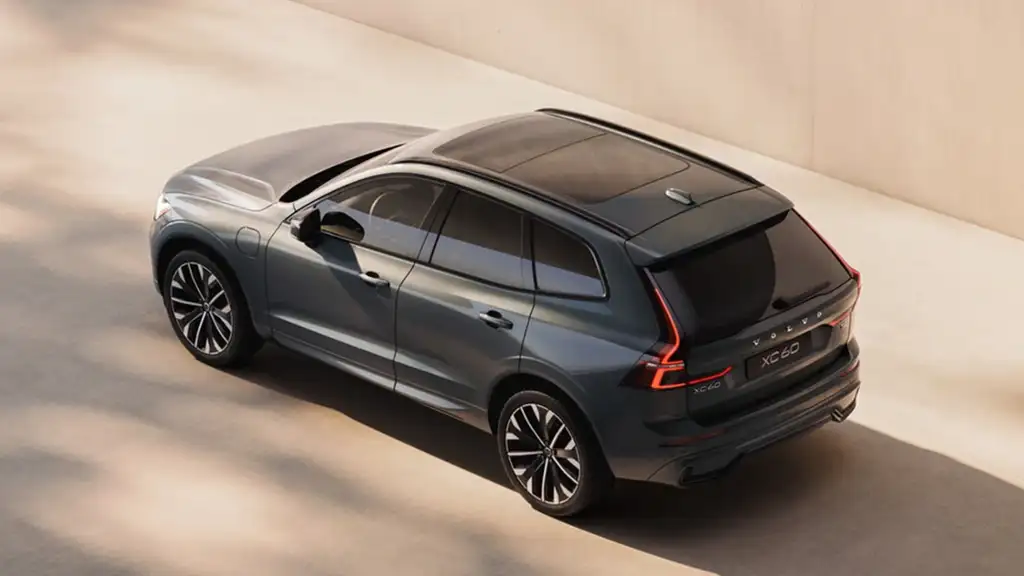
The exterior design of the 2026 Volvo XC60 Plug-in Hybrid emphasizes aerodynamic efficiency and structural integrity. Body panels are shaped to reduce air resistance while maintaining sufficient cooling airflow for the powertrain and battery systems. The roofline, side mirrors, and front fascia are optimized to manage airflow at highway speeds, contributing to vehicle stability and efficiency.
Lighting systems use LED technology to provide consistent illumination while minimizing energy consumption. These systems are integrated into the vehicle’s electronic architecture and adapt automatically to driving conditions. Wheel designs balance airflow management and brake cooling requirements, supporting both efficiency and braking performance.
Cabin Layout and Digital Interface Architecture
The interior of the 2026 Volvo XC60 Plug-in Hybrid is designed around functional ergonomics and digital integration. Instrumentation includes a fully digital driver display that provides information on vehicle speed, energy consumption, battery charge status, and power distribution. The central touchscreen integrates navigation, media, climate control, and vehicle settings into a single interface.
The infotainment system supports over-the-air software updates, allowing system improvements and feature updates without physical service visits. Climate control functions are calibrated to operate efficiently during electric driving, reducing energy draw while maintaining consistent cabin temperature. Cabin materials and layout are selected to support durability and long-term usability rather than decorative emphasis.
Safety Architecture and Driver Assistance Integration
Safety systems in the 2026 Volvo XC60 Plug-in Hybrid are designed to operate continuously during vehicle operation. Radar and camera sensors monitor surrounding traffic, lane position, and potential obstacles. Collision avoidance systems can provide braking assistance or steering input when a risk is detected, supporting accident prevention or impact mitigation.
Lane support systems assist with maintaining proper road position, while adaptive cruise control adjusts vehicle speed based on traffic flow. These systems are calibrated to operate smoothly and predictably, reducing abrupt inputs and supporting driver awareness.
The vehicle’s structural safety design incorporates reinforced passenger compartments and energy-absorbing zones engineered to manage collision forces. These features are integrated into the overall body structure and operate in coordination with restraint systems to support occupant protection.
Suspension Tuning and Braking Performance
The suspension system of the 2026 Volvo XC60 Plug-in Hybrid is calibrated to accommodate the additional mass of the battery while maintaining ride control and handling stability. Spring rates, damping characteristics, and chassis geometry are adjusted to support balanced vehicle dynamics across different driving conditions.
Regenerative braking operates in coordination with traditional braking components, capturing energy during deceleration and storing it in the battery. Brake pedal response remains consistent regardless of regenerative input, ensuring predictable stopping behavior. This system reduces brake wear while improving overall energy efficiency.
Schedule a Test Ride in Bristol, TN
Drivers interested in examining the engineering approach of the 2026 Volvo XC60 Plug-in Hybrid are encouraged to experience the vehicle in operation. A test drive provides an opportunity to observe electric-only driving behavior, evaluate power transitions between propulsion systems, and assess the responsiveness of driver assistance technologies. The integration of electrification, all-wheel drive, and safety systems can be evaluated directly during varied driving conditions. Our team at Friendship Volvo of Bristol in Bristol, TN, can provide detailed explanations of the vehicle’s systems and answer technical questions. Scheduling a test drive allows for a practical assessment of how this plug-in hybrid SUV performs during everyday operation.
Contact Us